
5 Myths About Personal Color Analysis — And Why They Miss the Point
Personal Color Analysis is having a moment — and so is the backlash. 😉 Lately, in my social media feeds, I’ve been seeing some…pushback against color analysis. I get it; my own response to anything that strikes me as over-hyped is to avoid, or even dismiss it. But I do think some of the critiques are misplaced, or based on misunderstanding of the theory and application. Sure, not everything will resonate with everyone, and we each process information differently.
I’ll be honest — before my own color analysis in 2019, I wasn’t sure I needed it either. I just knew I was stuck in an all-black rut and couldn’t figure out how to add color in a way that felt like me. That experience is a big part of why I’m so passionate about this work, and why the criticisms I’m seeing feel worth addressing.
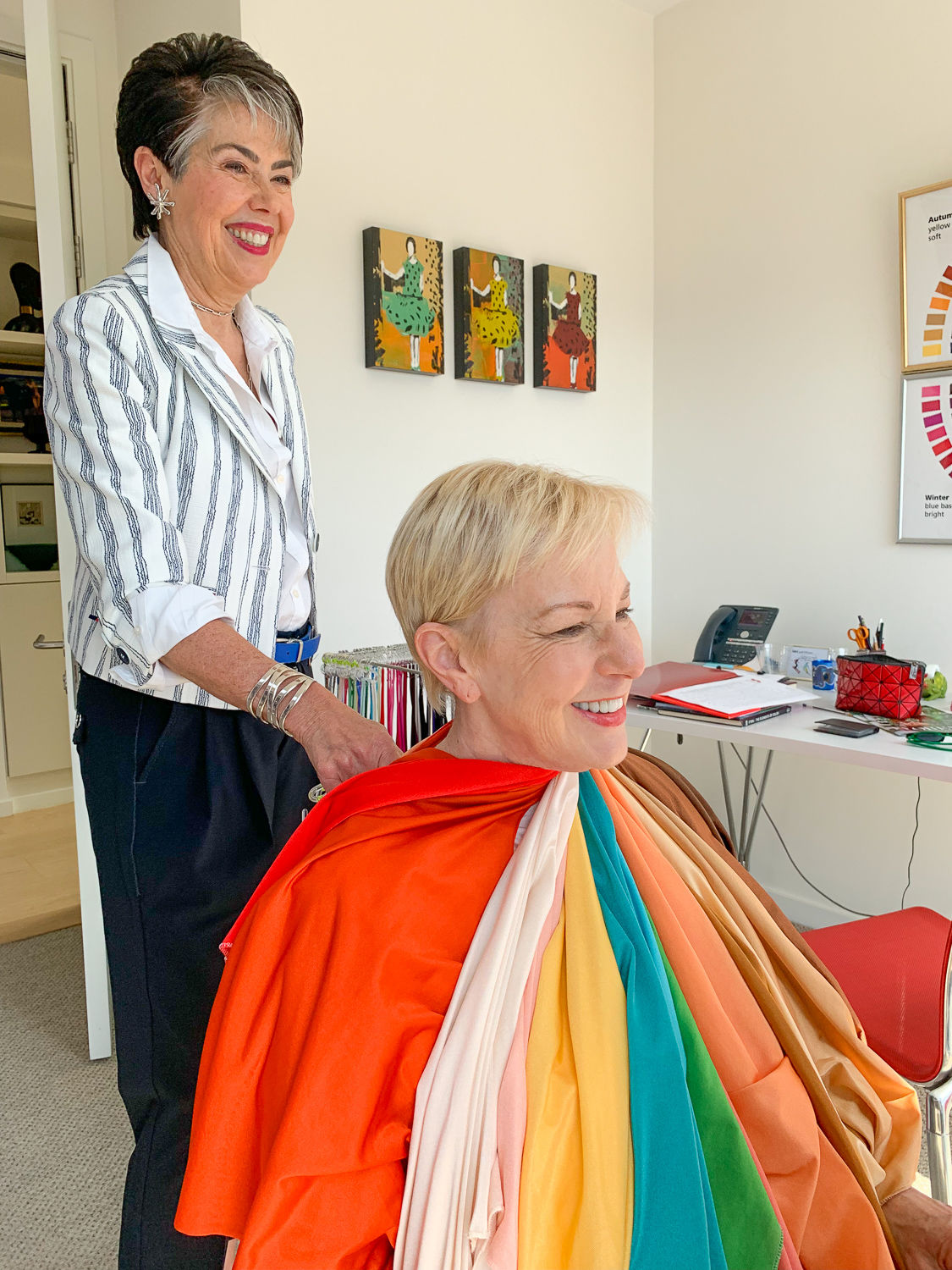
Why Online Color Analysis Tools Often Get It Wrong
“I did 3 different online analyses and got 3 different results.” Maybe these automated online sites or apps get it right sometimes, but I’ve rarely seen that happen — and when an online analysis does work, it’s usually because there’s an experienced, trained analyst behind it interpreting the results, not just an algorithm or AI. When you upload a photo, it may or may not be an accurate representation of your skin tone. Lighting, camera adjustments, and screen/monitor settings can all affect how colors show up.
What I believe really makes personal color analysis “stick,” is when the client is able to see the changes in their skin and features as the various color drapes are applied. And that happens best in an in-person setting, with good, natural light. (Not all in-person analyses are created equal, either — different systems use different methodologies. Our system goes well beyond the original 4-season model from the 1980s, using skin tone as a foundation with four sub-groups within each season for a much more individualized result.)
If you’re curious about what a real in-person analysis involves — and how it differs from what an algorithm can do — I answered some of the most common questions about the process here: The Top 3 Questions People Ask About Color Analysis
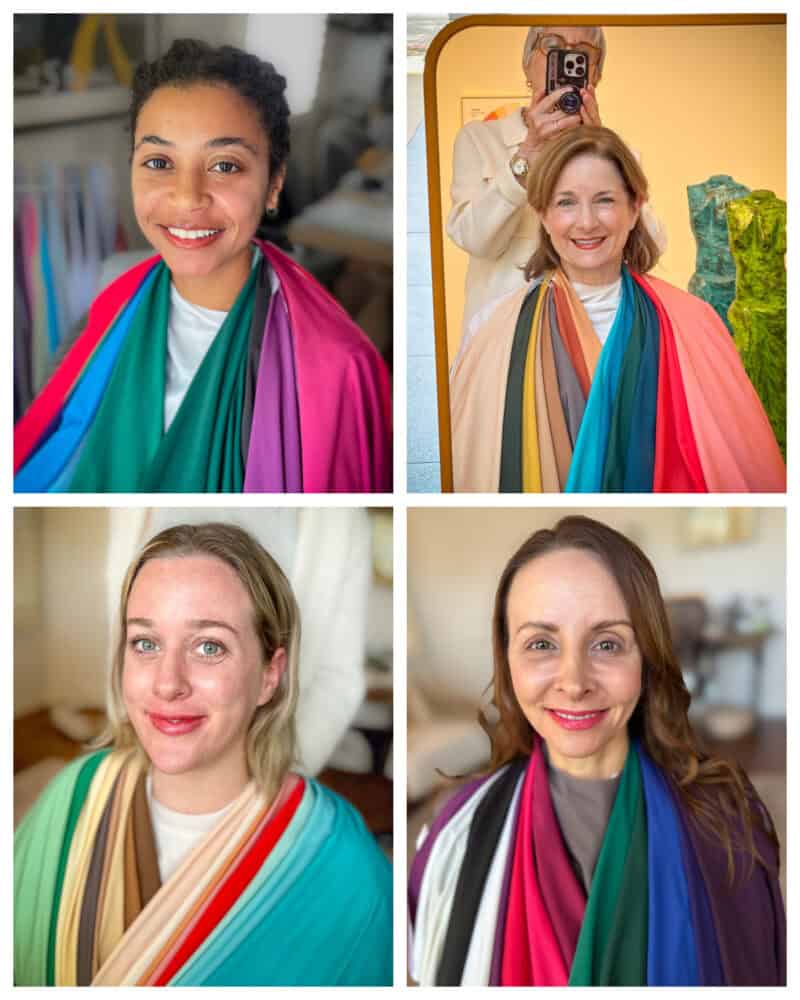
Color Analysis Isn’t a Rulebook — It’s a Framework
“It’s too restrictive/just another set of rules.” I will never tell a client not to wear a color or style that they LOVE and that they feel expresses who they are. But what often happens is that when they see the effects of different colors next to their skin, they want to start wearing more of what lights them up. And, I find that people are often instinctively drawn to some of their best colors. I often hear “I love that color but never thought I could wear it.”
And your color palette isn’t your identity. It’s a tool that helps you choose and combine colors, and build a cohesive wardrobe. And no, you don’t have to wear every color in your palette. You can stick to neutrals, or add a color here or there as an accent, or go bold…it’s all about what feels right to you.
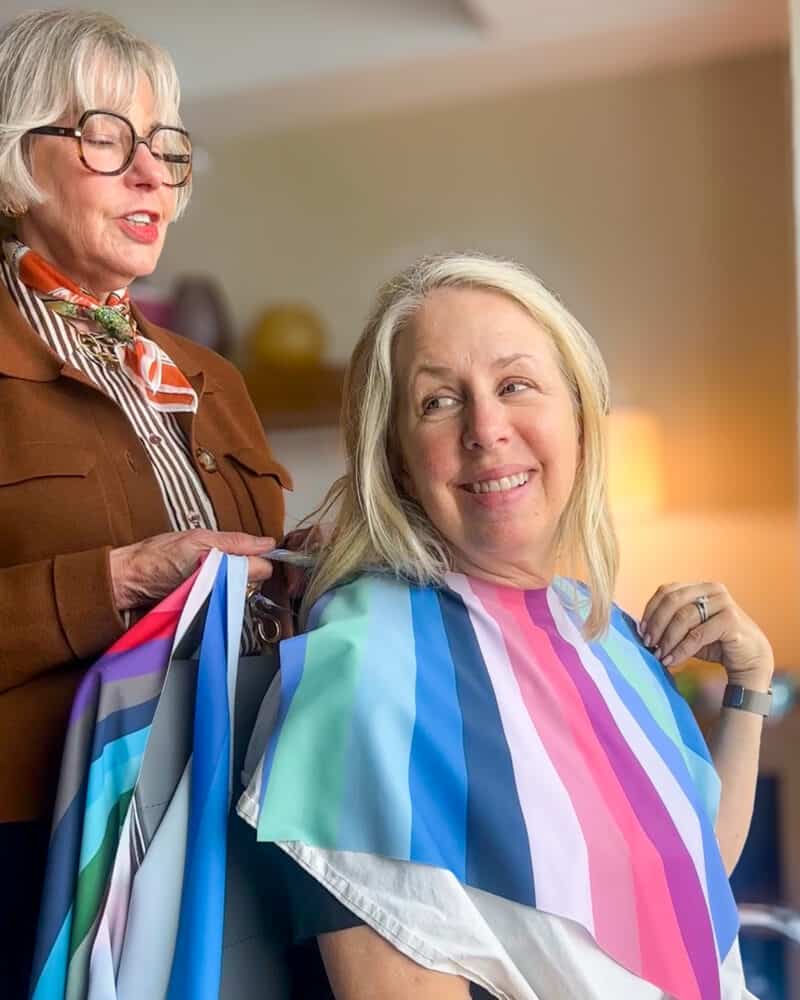
You Don’t Need to Overhaul Your Wardrobe
“I don’t want/can’t afford to replace my entire wardrobe.” You don’t have to! You can start with accessories like scarves or inexpensive tops to add your best colors near your face. As you eventually replace wardrobe items, you’ll have the opportunity to add more of your palette colors.
And even if you plan to eventually re-build your wardrobe, it will take time. Not every color is available every season. (It took years after my color analysis before I was able to find good basics in brown. I always tell clients, “buy it when you find it.”)
What If You Don’t Love Your Palette?
“What if I don’t like any of the colors in my palette?” Again, you don’t have to wear anything you don’t like. But as I said above, I’ve found most clients are excited about wearing at least some of their best colors.
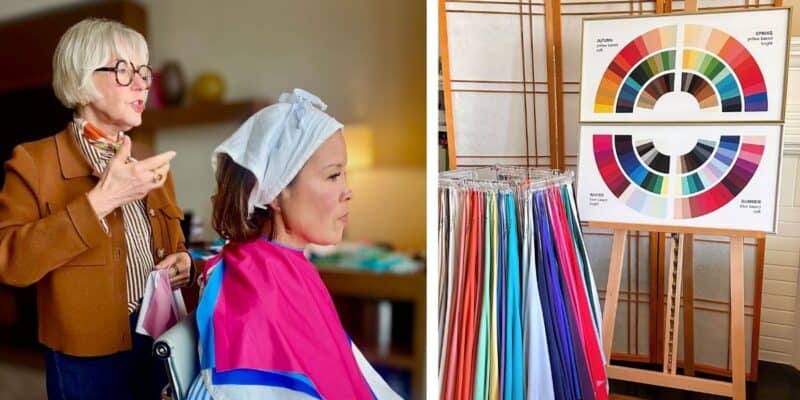
Wear What You Love — Color Analysis Supports That
“Women should just wear what they like, not follow a set of outdated rules.” I agree — if you’re happy with your style and wardrobe choices, that’s awesome! But as I mentioned, we all process information differently. For me, having a framework was the missing piece that turned color from something overwhelming into something I actually enjoyed. And the goal was never rigid rules — I still sometimes wear colors outside my palette, but now I understand how to combine them so everything harmonizes.
Why to Consider Personal Color Analysis
With so many choices out there today, and so many voices telling us what or what not to wear, we can find ourselves overwhelmed. What Personal Color and Style Analysis provides is a framework that can help us navigate seemingly infinite options, and avoid decision fatigue. It’s an investment that can help us simplify, avoid costly mistakes, and fine-tune our personal style. If this is something you’re interested in, I’m taking appointments for this fall and winter.
If you still have questions about how color analysis works, I’ve answered the ones I hear most often HERE — it’s a good place to start before booking a session.

Stay in touch
Sign up to be notified of new posts and updates from une femme d’un certain âge.
I had my color analysis done circa 1982, and it radically changed how I dress. Not every one of “my” colors (I’m talking about you, Lemon Yellow!) made into my wardrobe, and as I’ve gotten older I’ve continued to refine my use of color. And I modified my existing wardrobe (circa 1982) by adding blouses and scarfs in my colors and buying new clothes over time. Shopping for clothes was greatly simplified by avoiding colors outside of my palette. The. Best. Decision. Ever.
I’m not surprised at the backlash against color analysis. A prevalent attitude today is “no one is going to tell me what to do” (eg, “I don’t want rules”). Yet a wise woman (or man) is one who will seek out and listen to the counsel of others, especially those who have expertise. AI cannot provide an accurate color analysis. Only a trained, professional stylist like Susan can. It is IMO one of the best investments someone can make.
You present a very thoughtful, nuanced and convincing argument, Susan!
Thank you, caroline!
I had my colours done in the early 80’s (Winter – true winter in the extended seasons) and think the concept has so much merit that I have not strayed from “my colours” in 40 years. Not only has it saved me time and money over the years, but everything in my closet coordinates and I know these are my most flattering colours. And your season does not change. At 72, with white hair, there are some colours (i.e. icy blue) that suit me better now and I am slowly replacing black in tops as that feels a bit harsh now. With my many black coats & jackets, I always pop a bit of colour with scarves. I would absolutely recommend this.
Hi Susan,
I had my first colour analysis done in my mid twenties when I was a dark/deep Winter. I loved black and it loved me.
I remember opening my wardrobe doors many, many years (decades) later and to be honest, nothing excited me anymore. I had another colour analysis done to discover I’m a warm Spring, which to me made sense esp. as I’ve aged and my skin tone & hair colour have changed. I’ve slowly culled items from my wardrobe that no longer suit, plus I retired a couple of years ago. I’m certainly no ‘fashionista’ but I do care about how I look and present myself, even at 70. I’ve also found that I have a more discretionary eye when purchasing, and if it can’t go with 3 – 4 other items in my wardrobe – I don’t buy it. The hardest part I think is stepping beyond the boundaries we’ve put around ourselves and, also how we see ourselves.
I’m 100% in. I always knew I was winter, but as a fair skinned green eyed person I never imagined I would be dark winter. And yet there were clues missed. Fair olive/neutral skin. Red highlights in my very dark brown hair. A bit of gold around the pupils of my green gray eyes. I’ll share two light bulb moments. (1) In J Crew buying three random things: white jeans, kiwi and white striped button down, royal blue cardigan. As she folded them together I thought,”That’s an outfit!” And yes, my whole wardrobe “goes” together because the colors are all cool, clear and dark(er). (2) I had to head out to volunteer, and I went into the bathroom to put on makeup. I was wearing a dark, cool green turtleneck. One of my best colors. I looked in the mirror and really didn’t need makeup because I was wearing the right color! Mind blowing. And when I don’t quite wear my colors I need more makeup! Final thought, Susan’s advice of buying your colors when you see them couldn’t be more important. As a winter I have to suffer through the spring lull until we get into summer and my bright whites, fuchsias, royal blues and reds return.
I am in my mid 70’s and I am a total fan of color analysis! I had my first go at it back in the 80’s. I was, and still am, an autumn. I didn’t stay the course. You inspired me to have another go at back in 2020. I had another in person analysis then. yes, still an autumn but with more refinement. I rarely don’t wear my best colors and when I do, I feel off. Thanks again for your inspiration!
I received the gift of color analysis as my high school graduation present. Thanks, Mom! It was eye-opening, esp knowing I looked better in silver jewelry, as opposed to gold. I suddenly understood why I could never find any jewelry I liked, why everything looked garish and wrong. Fast forward a few decades, and I still use the foundational knowledge I gained. It was a lifetime investment (which very few things are). If I lived in LA, I wouldn’t hesitate to do this with Susan — I can’t imagine anything more fun, really.
I’m on the East Coast but if I ever make it to CA, I’d love to have my colors done. I’m a winter, but I know there’s a lot more to know. I’m surprised that even some of your fellow bloggers, who I respect, have used the term ‘rigid’ about staying in your season. It’s pejorative, and I’m surprised. And they can be so wrong. A recent column by an influencer in Georgia extolled butter yellow as being superlative with gray hair. In fact, she loves pastels with gray hair. I could not look more awful than in pastels lol.
Some colors just drain the life out of me! (Wisteria blue is deadly.) I’m much more comfortable knowing there is a reason I stick to warm shades. That said, I’ll never give up black. Black pants are workhorses! Add a black cardigan or jacket, and I feel dressed up. They are a frame for the warm color near my face. (Black and pink? Dior did it, and so can I.)
I’m 62 and a True/Cool Summer. I’ve had several in-person analyses done and they all said the same. I’m wearing one of my colors 99.9% of the time because they make me happy. Now that my hair is light grey and white, I find myself wearing more of the lighter colors of my palette and they look great. It’s so easy to walk into a store and search only for my colors and if not, out I go. Everything in my closet mixes and matches or at least harmonizes together. Color analysis is one of the best things I’ve ever done for myself.
I cannot imagine relying on a computer algorithm for color advice. In the 80s I was rated an autumn. I liked the palette and generally stuck close to it except for a few flings with black & white (so chic I thought). In the last few years I started to think I looked tired in colors I used to love. I thought it would be useful to learn my sub-season but to my utter shock I learned that I am a “brown summer” the sub-season right on the edge of autumn. My consultant told me that I am so neutral that while its not common this shift is no unheard of. I saw the difference with own eyes. These were not colors I gravitated toward but they were colors that brightened my face. Changing my makeup to cool tones was a game changer. As a “brown summer” there are autumn colors that I’ll wear but I won’t be purchasing them after seeing the difference though ts harder to find pieces that are not “sweet”.
I got my colors done, by your affiliated company, because I, too, was in a rut and not feeling good about myself. It was a revelation and I could SEE the difference and FEEL the difference immediately. It’s been 2 years, and I rarely wear black anymore — my seasonal clothes (color!) make me feel so much happier and look brighter. The experience for me was great, and shopping is SO much easier because I can beeline to what colors I know will look good on me. If you don’t believe in it, don’t try it. But as Susan says, don’t just assume an online app is the same as an in-person consultation.
Why would anyone be critical of color analysis? If one doesn’t want it, don’t have it, and leave it to those who do. No one is forcing color analysis on anyone else!
Susan, I love your work! Having your colours done is empowering and an investment in yourself. Being able to walk into a store and walk straight out again if there’s nothing in my palette, before the salesperson tries to talk me into something that’s popular but not ‘me’. I now sew my own clothes and am having a lot of fun choosing soft summer fabrics.
My colour analysis revealed four things I did not know. 1) Bright yellow and 2) bright orange look good on me. 3) Colours that flatter me must be saturated, sparkly, bright. And 4) denim and beige look terrible near my face. I have learned how to wear colours that don’t suit me by wearing them at the bottom and if I do wear them near my face I will add earrings, a necklace or a scarf in the right colour(s). The analysis has saved me from a lot of bad purchases. Black and white is my favourite combination but bad for me. Which is why you will almost always see me wear if with a pop of colour. And there are days I just don’t care haha.
Greetje
Hello ~ I absolutely loved my color analysis with Susan and Manina/Red Leopard! Since retirement, I’ve winnowed my wardrobe and now purchase a clothing item only once per season. Color analysis means that I can avoid poor choices and keep well-made pieces for a long, long time. But I’m wondering where I can purchase a new packet of “Bright Winter” paper color swatches….the plastic casing that holds them has stuck to all the cards, making them difficult to see and impossible to remove. Thank you!
Hi kb, I’d be happy to get you a new set…if you’d like to email me [email protected] we can arrange.
To quote Neil Diamond, “Then I saw her face, Now I’m a Believer!” The proof is in the way I see myself in MY colors. I look MY best in MY palette – I, too, had my colors ‘done’ back in the day, and I eschewed that advice, and just bought what the stores were selling – jewel tones…which never have worked well for my fabulous, autumnal-toned self. I had my colors done (again) in 2012 and it’s been LIFE-CHANGING, to say the least! I even had my dining room re-painted to flatter MOI! “When you know, you know!”
I have loved following your journey with colour Susan and you continue to give me so much inspiration for my own life. Thank you so very much for sharing so much of yours xx
I really enjoy your blog. I had my color analysis done in 1978, and I am a true autumn. I only wear black for funerals, and even then, I will wear a scarf in one of my good colors next to my face. I am 77 now, but I grew up in rural West Texas. When I am not working (I’m a psychologist), I live in my jeans. I wear tops in my colors, and I feel great. I appreciate your column because your color advice is always spot on.
Thanks so much, Pat! I’m glad it’s helpful.